The story · 01
Even the strong need somewhere safe
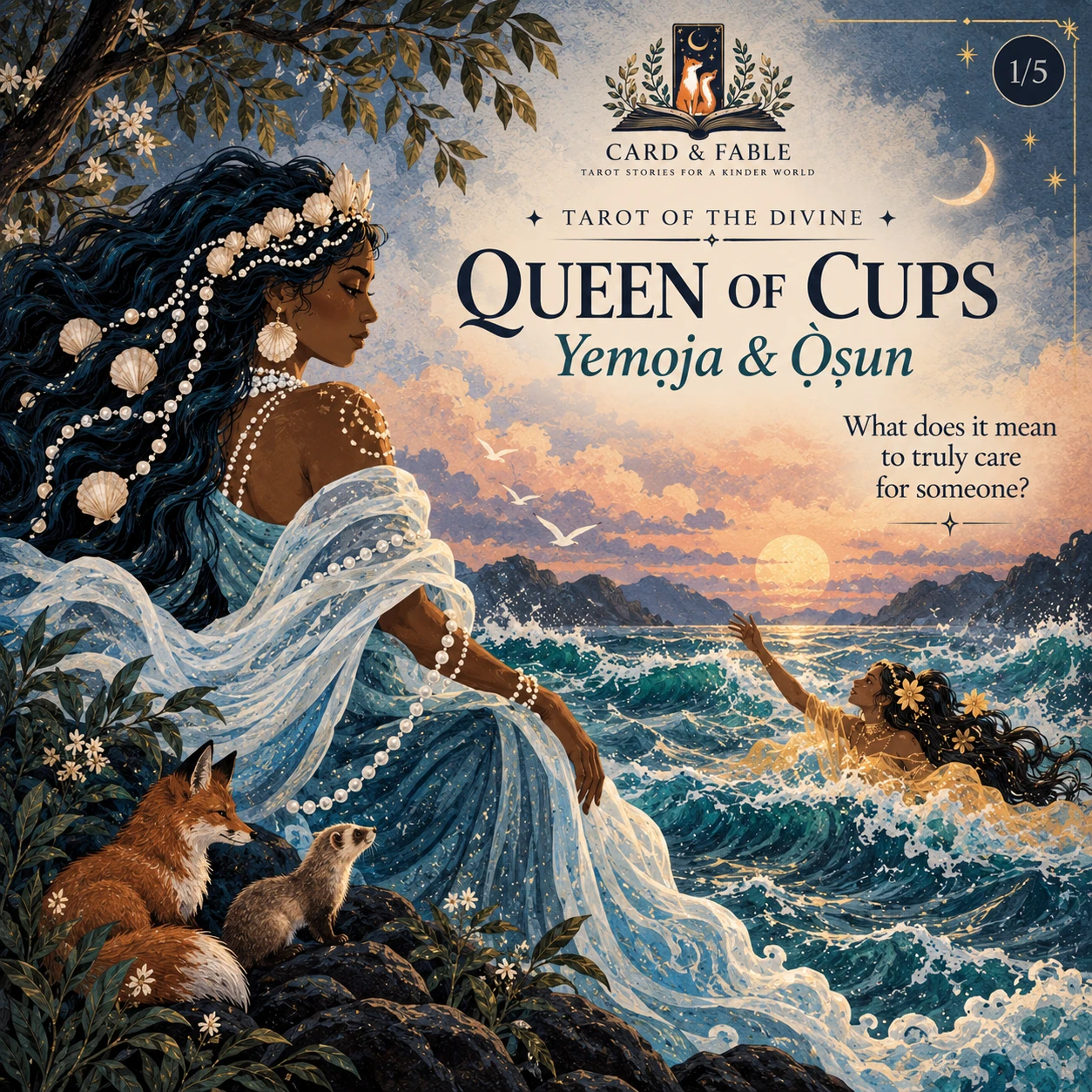
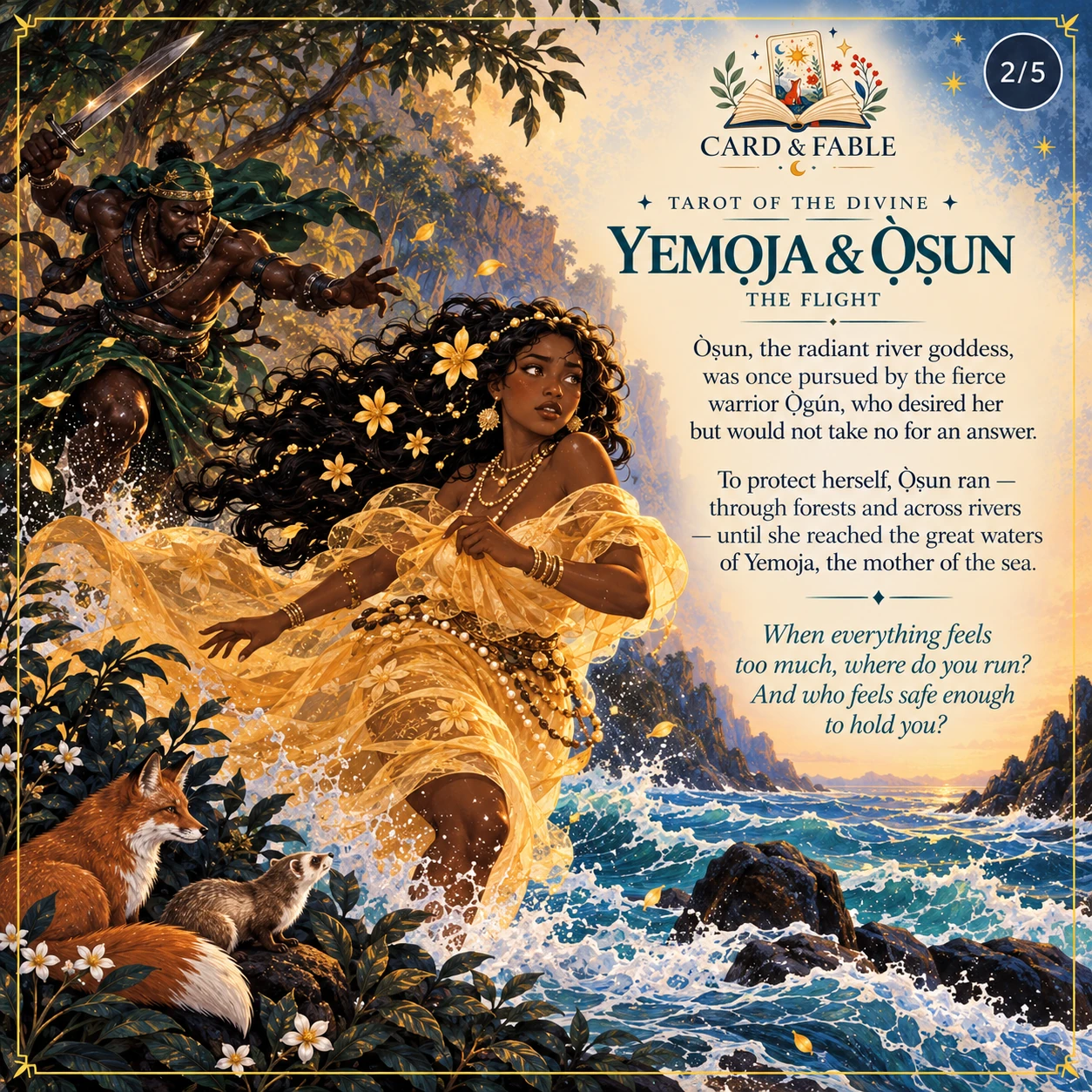
In one telling, Ọ̀ṣun was fleeing Ògún, who pursued her. She ran until she slipped into a river and the current carried her away.
Yemọja saw her struggling. She reached into the water and brought her to safety.
The moment at the heart of this story is simple: someone was in danger, and someone else noticed—and helped.
Yemọja is an orisha, a divine presence in Yorùbá religion. Her waters are associated with nurture and protection.
In Nigeria she is particularly associated with the Ogun River; in Cuban and Brazilian traditions, her ocean associations are prominent. Names, relationships and stories vary across communities.
This page retells one rescue story, rather than presenting a single universal account. The sea imagery follows our existing artwork. Read about the rescue tradition · Explore Yemayá’s river and ocean associations.
The story · 02
A hand in the water
The rescue did more than interrupt Ọ̀ṣun’s flight. In this telling, Yemọja also gave her the fresh waters and rivers as a realm of her own—a place of belonging and safety.
Our reading of that gesture is care that helps another person find their footing. It offers shelter while leaving room for a life of their own.
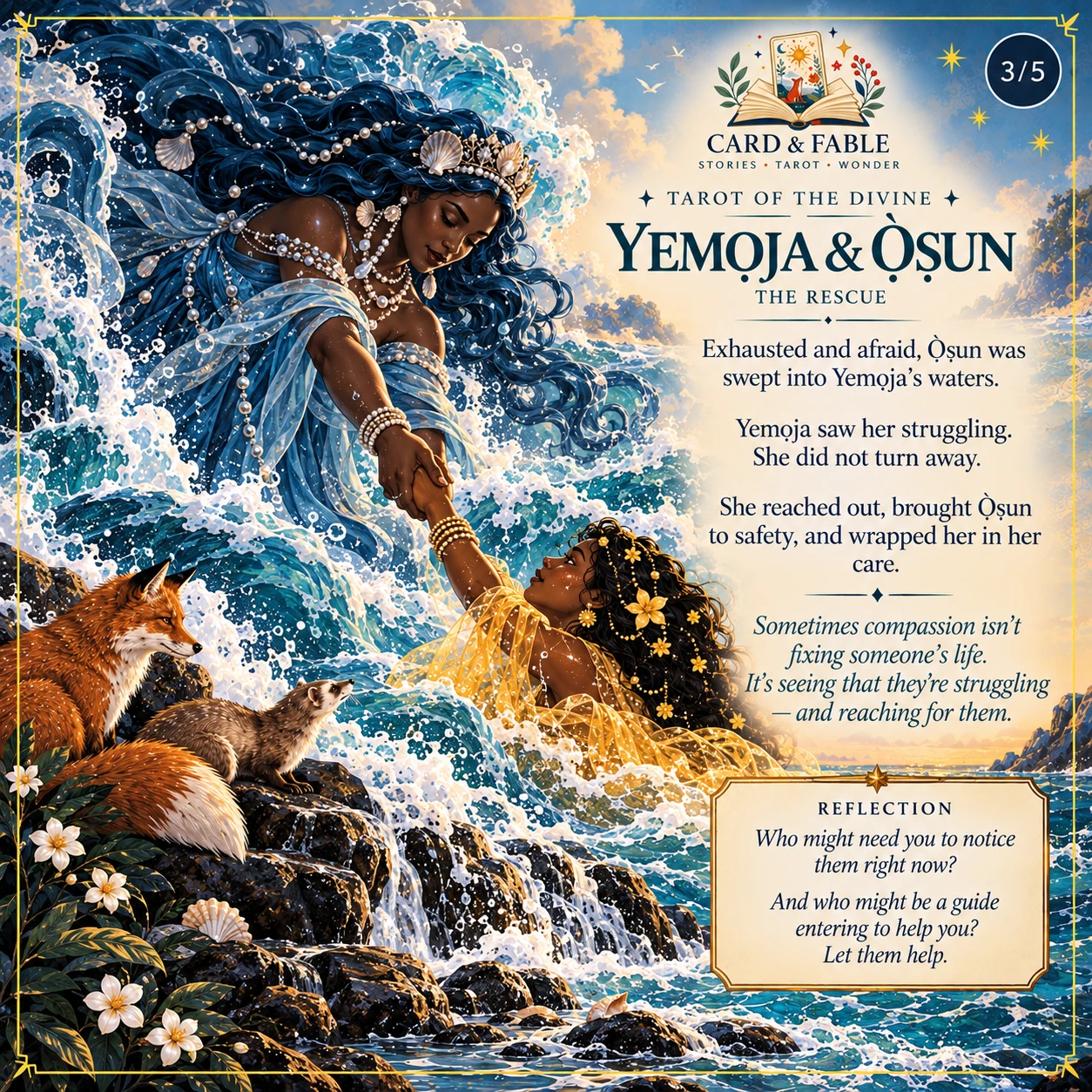
Perhaps you recognise the person reaching out. Perhaps you recognise the person who has been trying to manage alone.
Both belong in this story. Sometimes you can offer steadiness. Sometimes you need to let someone offer it to you.
Care can be a place to recover your strength—and remember that it is still yours.
From myth to meaning
Why Yemọja belongs to the Queen of Cups
In our tarot interpretation, Yemọja’s care speaks to the Queen of Cups: compassion, emotional wisdom and the ability to meet another person’s feelings with steadiness.
This Queen may describe a quality within you, or someone whose presence feels supportive—a mentor, a trusted friend, a wise teacher or a caring family member.
Listen deeply. Offer care. Let yourself receive it. Keep room for your own heart, too.
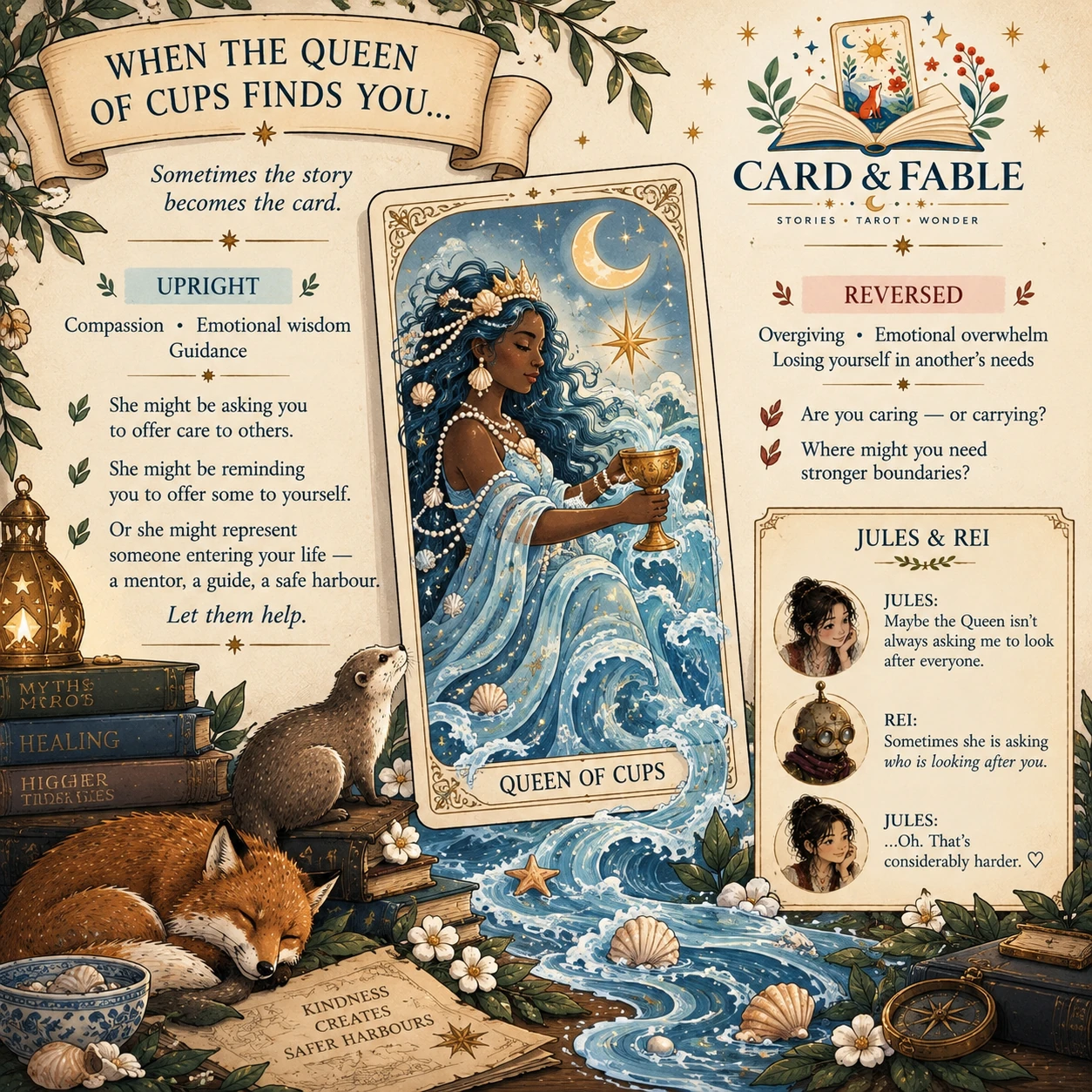
A cup has a shape and an edge. We use that image to think about boundaries: your kindness needs enough rest and space to remain freely given.
The Queen’s wisdom is in noticing what is needed, what you can offer and what belongs to someone else to decide.
Reading the Queen of Cups
Upright & reversed
Upright
Compassion · Emotional wisdom · Intuition · Nurture · Guidance
Make space to hear what you feel. A calm, attentive response may be more helpful than a quick solution.
This card can point to supportive guidance, a caring presence or your own capacity to respond with understanding. You may be asked to offer that care—or allow yourself to receive it.
Reversed
Overgiving · Emotional overwhelm · Poor boundaries · Losing yourself in others’ needs
You may have been holding too much for too long. Resentment, exhaustion or confusion can be a prompt to notice where your own needs have gone unheard.
Pause before giving more. Ask what would help you feel grounded, and which responsibilities are actually yours. Receiving support is part of caring well.
The old story enters your life
Why might this card have appeared for you?
Perhaps you have become the person everyone turns to. Perhaps someone has offered help and you are finding it difficult to accept.
The Queen of Cups invites you to notice the direction care is flowing. Is there room for your feelings as well as everyone else’s?

It may also be time to slow down enough to understand a feeling before acting on it. Intuition can begin a question; conversation and what you observe can help you explore it.
Your question and the surrounding cards shape the reading. These interpretations offer reflection, rather than a fixed prediction.
Love
If it appeared in a love reading
Look at the emotional quality of the connection. Can you be honest about what you feel? Are you listened to with care—and able to offer the same?
The Queen of Cups can invite warmth, empathy and a gentler conversation. Understanding someone’s feelings does not require you to set aside your own needs.
If you have become responsible for keeping the peace, ask whether care has become one-sided. You can support a partner without taking on every problem as your own.
Can I care for this person and still make room for myself?
If you are single, consider the kind of emotional connection you want to build. Notice how people respond to your boundaries, alongside how they respond to your affection.
This Queen is not automatically a romantic partner. She may point to a trusted person whose guidance helps you understand the relationship more clearly.
Career
If it appeared in a career reading
A mentor, thoughtful manager or experienced colleague may have something valuable to offer. Let yourself ask for their perspective without handing over your own judgement.
You may also be the person others rely on to listen, resolve tension or help a team feel supported. Those are skills worth recognising.

Consider whether that emotional work is acknowledged and sustainable. Being dependable does not mean always being available.
Where is my care a strength—and where do I need clearer limits?
Reversed, the card may prompt you to name an overloaded workload, stop absorbing every conflict or ask for support. Start with one clear conversation about what you can realistically take on.
Personal
If it appeared in a personal reading
What feeling have you been making room for in everyone except yourself?
The Queen of Cups invites the same patience you might offer a friend. You can notice sadness, frustration or uncertainty without needing to explain it away immediately.
A quiet walk, a few honest lines in a journal or a conversation with someone you trust may help you understand what you need.
You are allowed to be cared for before you have everything worked out.
Try separating what you feel from what you are responsible for. You can care about someone deeply while letting their choices remain their own.
A moment for yourself
Questions to carry
Choose the question that feels closest today. There is no need to answer them all.
- Which feeling needs my attention rather than my judgement?
- Am I offering care—or carrying more than is mine?
- Where would a clearer boundary protect my kindness?
- Who feels safe enough to let them care for me?
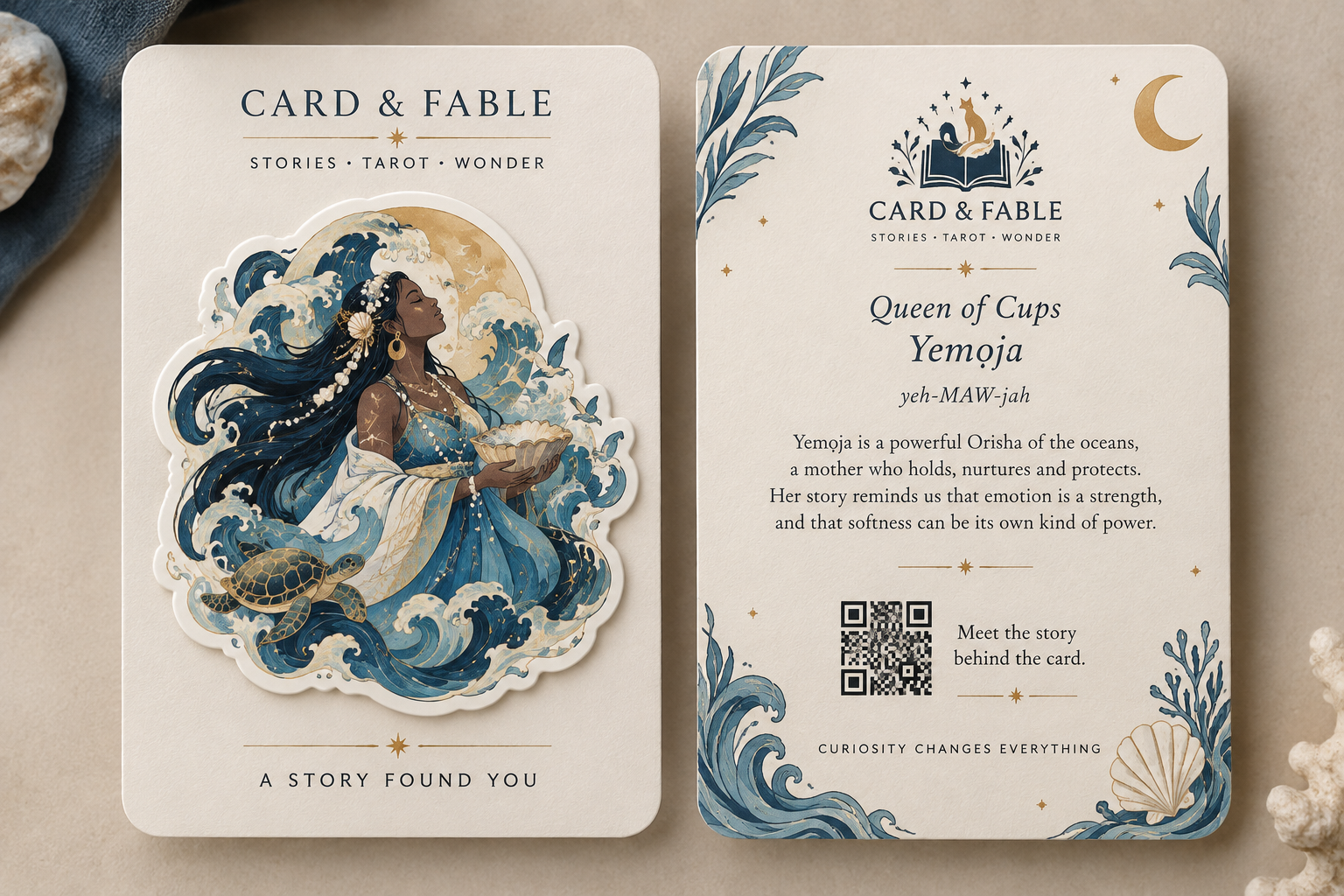
The Card & Fable shop
Carry the story with you
A reminder that the care you offer belongs to you, too.
Keep Yemọja beside a journal entry about boundaries or receiving support. Or share her story with a mentor, teacher or someone whose kindness has stayed with you.
The die-cut sticker is a separate piece, mounted on its illustrated backing card. Keep the card with the story, and give the sticker a place in yours.
See the sticker and backing-card design